
Brand Demand vs. Buyer Intent
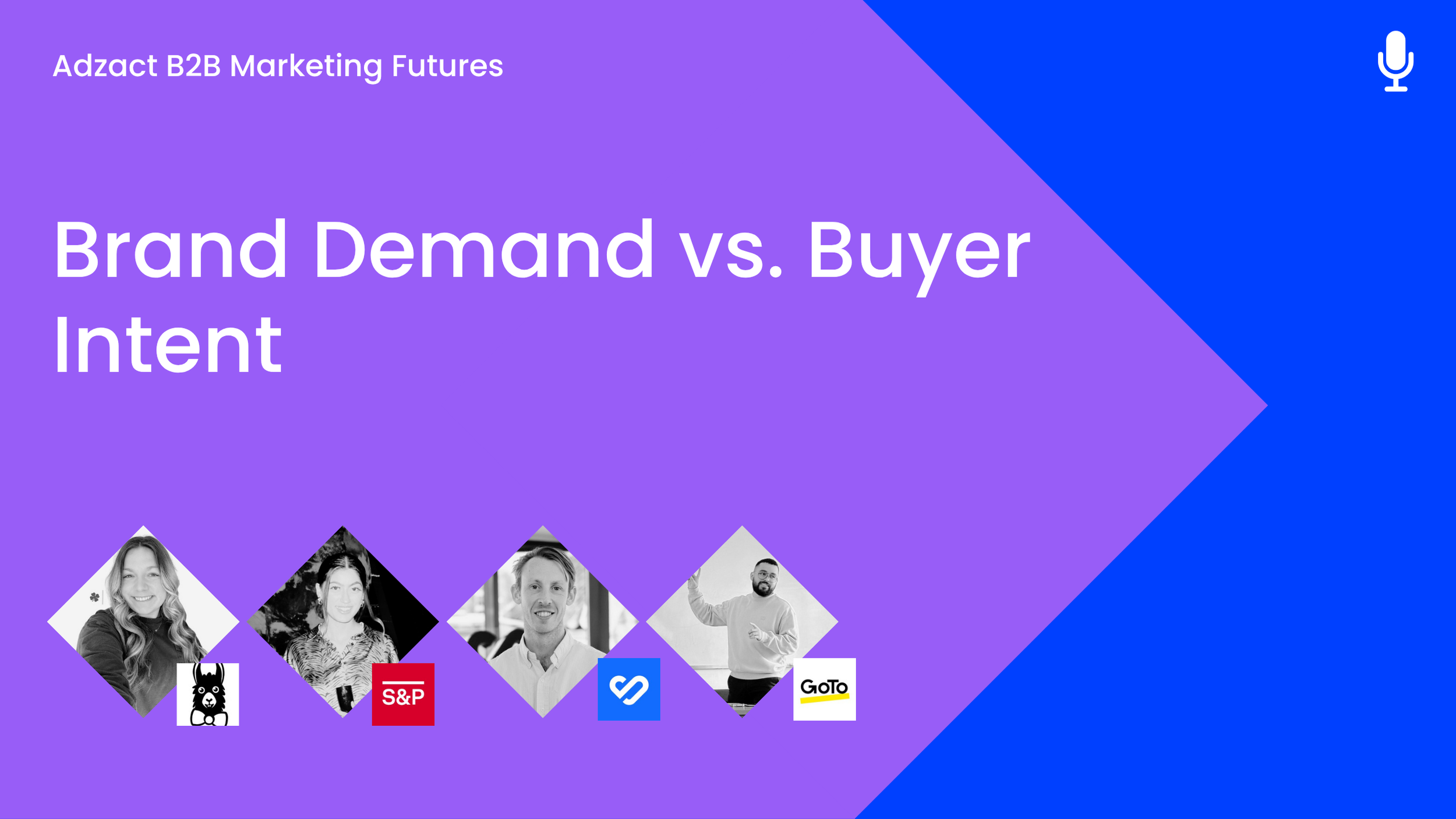
Where do you focus your marketing efforts today, on creating demand or capturing it? We will open with a quick pulse check. Do you lean toward a 50/50 split, 60/40, or do you reject the split altogether?
What strategies have worked best for you in building long-term brand awareness and engagement? This is a chance to share top-of-funnel tactics, brand-led initiatives, and creative bets that helped shape awareness or differentiation.
What strategies have worked best for you in capturing demand? From paid search to content, sales enablement or retargeting, what has helped you turn interest into pipeline?
What does the right balance between demand creation and demand capture look like for your organisation? Has that balance changed as you have scaled? Does it vary by region, segment, deal size, or maturity?
How do you connect long-term brand initiatives with pipeline and revenue goals? We will close by discussing how you link brand-led work to performance metrics and business outcomes.
Guests
• Kenna Rooney, Senior Performance Marketing Manager at EasyLlama
• Amrit Kaur, Demand Generation Director at S&P Global
• Will Cumming, Lifecycle Marketing Leader at Bynder
• Jose Granados, Paid Media & Performance Marketing Manager at GoTo
Transcript
Joaquin Dominguez (00:00)
Welcome to B2B Marketing Futures, the podcast for B2B marketers sponsored by AdSact Most marketing teams say they are doing both building demand and capturing it But when you actually look at where time, budget and pressure go, it's rarely balanced So today we are not just asking what works, we are asking something more uncomfortable
Are we over investing in capturing demand that already exists and under investing in creating it in the first place? And if that's true, what does it actually take to fix it? But before we get into that, let's start with some quick introductions. Maybe Will, would you like to give a sentence on yourself?
Will Cumming (00:44)
My name is Will Cumming, I work at Blindar and I work in life cycle marketing, have been for the last five years. So hello everyone.
Joaquin Dominguez (00:53)
Welcome. Kenna, welcome.
Kenna Rooney (00:55)
Hey everyone, my name is Kenna. I work for a company called Easy Llama. We are compliance training platform and course developer. And I am our performance marketer. I am hands-on in all of our ad platforms, but creating strategy for those platforms as well.
Joaquin Dominguez (01:08)
Awesome, welcome. Amrit, welcome.
Amrit Kaur (01:10)
Thank you. So I work at S &P Global for over two years now. And before S &P happened, I was heavily in financial and asset management industry, but been doing marketing for over 10 years now. So really excited for this conversation. think demand generation is definitely something which gets ignored often with short term.
demand capture taking the place of looking forward to our conversation.
Joaquin Dominguez (01:39)
Welcome, Enbrid and José, welcome!
Jose Granados (01:41)
So yeah, name is Jose Fernandes. I'm a manager at GoTo. I'm based in Guatemala. I'm working for a marketing team in the US, helping to see all our campaigns across the globe. And yeah, nice to meet you all.
Joaquin Dominguez (01:55)
Amazing, thank you all so much. Okay, so let's make this concrete. If I look at your calendar and your budget, not your strategy deck, would I see a team focus on creating demand or capturing it? And more importantly, is that a conscious decision or just where the pressure has pushed you?
Kenna Rooney (02:16)
As of right now, you would see it more on the capturing side, mainly just because of conversations to have with buy-in leaders on the importance of investing in a brand and for the benefit it has of developing that demand to then capture it. But right now, it's a conversation that's ongoing alongside the capturing portion of it for us.
Joaquin Dominguez (02:37)
Interesting, would you say it's 70 % capturing and 30 creating or so?
Kenna Rooney (02:43)
I say I am working really hard on developing that brand strategy while I'm being held to a demand capture KPIs at the moment. So it's probably
Joaquin Dominguez (02:52)
Mm-hmm. Yeah.
Kenna Rooney (02:55)
like an 80 20 at the moment, but it's slowly that that difference is shifting more and more every day.
Joaquin Dominguez (03:03)
Interesting. What about the rest?
Amrit Kaur (03:05)
I think it really boils down to the goal. So I think when we are setting our goals,
you know, are we looking at a short-term pipeline or a longer-term pipeline if we are focusing more on short-term, then it is demand capture. But if it's more longer-term strategies, then we definitely have to look at demand generation as well. And I think timing plays a key role as well. You know, what our deal size looks like, when are we, you know, thinking to close these deals? Again, you know, all goes back to the goal.
So that's how I see both, you know, working, choosing between demand generation or demand capture. So really making sure it aligns back to what our organizational goals is and then what our departmental goals within marketing and sales is.
Well, what do others think? Do you think this sounds aligned or?
Will Cumming (03:59)
Yeah, I think like, it's hard to say, but I would say where I'm at is like, we lead probably 60 40 towards, towards capture. And I think that's really just driven by just the way businesses are, there's always such a demand to capture leads and it's very easily to be measured. But where I see like best performing teams treat capture, it's like almost you're trying to like harvest intent.
the future of the creation is like building that future intent. And I think it's much harder to really invest and make sure that that is working correctly. Like where I come from is life cycle and what is kind of building to me is constantly experimenting and understanding our consumers. And it really does take time to really drive that. So to your question, it's probably a 60-40 split.
Amrit Kaur (04:47)
I think we also often hear what smart companies do. And I know you asked this question in the beginning, like 70, 30 % because that's what is the benchmark, isn't it? 70 % demand generation to grow the pie. And then 30 % is to capture the demand to grab that share of the pie. But I think when we're scaling, we need to scale with demand generation and capture
cost or when costs increase due to demand capture because the compounding effect of demand generation is delayed but has a massive ROI is how I feel when we sort of compare both.
Kenna Rooney (05:28)
I agree with that. think a lot of it too is like, you you mentioned sales cycles and that's really helps depend on where you're going to put them a lot of the focus on, but it's hard to, you know, everyone I think focuses on that demand capture, get them in the door and then we can retarget them and nurture them and, go from there and get them to sales and then sales can start working them and go from there. But sales has, what's that conversation they're having when they first get this lead that comes through and
they call them and they're like, I've never heard of your company. You know, that's where that brand side of it really comes in to help expedite that process after the fact. So it's helped it, you know, bigger picture and helps everyone there is my opinion.
Jose Granados (06:09)
Yeah, I'm really aligned with that and also we are doing more in the demand capture But we don't leave the demand creation at the last part. I believe and we believe that the demand creation is like the base to capture good I don't want to say leads but good marketing qualified leads Yeah, I'm pretty aligned with you also
Amrit Kaur (06:29)
I just want to give a quick example of demand generation versus demand capture. think HFREFs, which is an SEO platform, they did a great job where when they came to the market three years, they just spent educating the market on SEO tools before most people.
you know, knew that they needed them. So I think now they own that category of being, you know, a bespoke SEO tool. yes, delayed response. It took three years for them to educate the market. But then, you know, when you track their demand generation efforts, you can see that when, you know, the branded search impression increase when you search for SEO tools.
Yeah, just want to do.
Joaquin Dominguez (07:15)
And
I'm curious about what have you done actually that taint perception? Because we agree that demand generation, and I think everyone agrees that demand generation is really important, right? But I'm curious, what have you done that actually taints the perception or created demand, not just generated investment? It's something that you invested...
in that didn't pay off immediately, but you are convinced move the market in your favor. Tell me about story and anecdotes or something that kind of conversations as well that you had internally. I think that would
be great to hear.
Kenna Rooney (07:52)
I've got one.
I got one. It immediately comes to mind. This is one that did play out in our benefit, so it was great. I worked for an intent data provider previous to coming to Easy Llama. And every time when I started there and I was like, why am I getting into the intent narrative? And you know, there's the big players in the space that you hear intent, you think of them, and then you're like, it doesn't work. You know, we came in and we shipped it hard with all these things, but
You know, no one really ever broke down. You have all this data at your fingertips. What do you do with it? And no one broke down what to actually do with it. So marketers are flying blind over here. They're passing these leads off to sales that they're like, they're showing intent and sales goes, I don't know what to do. You know, it was that whole narrative and it tainted the intent data word. We came in and it's really collaborative with the whole team there was so great. And we really shifted on, shifted that narrative and did a lot of educational content.
You know, we were in a position where our ICP was us. So we knew what we wanted to know and figured we, took our data, implemented it into our marketing engine, figured out what worked, what didn't work, and then wrote about it and shared it with our customers and our ICP and did webinars and eBooks and everything. But it wasn't just, you know, this is what you should do. It's what we positioned it in. This is what we did. This is what we found. And here's how you can adapt this into your own.
your own channels and it works. Our customers were very receptive to it. They loved it. our webinars broke registration records for us, because we took away that, side of it and just taught. I, so many people just don't, don't teach it. They gatekeep everything these days and it's just every, we're all trying to learn. We're on the same boat, everything shifting all the time. So just share it. And that was a very big brand win.
for demand gen for us.
I love that conversation. It was such a good one.
Amrit Kaur (09:44)
I'm
Will Cumming (09:45)
probably look to that as well. think where we've all from my experience in demand generation is there's always this pressure to drive intent as quick as humanly possible. We can drive to sales, we're going to close these deals and everyone's going to be happy. as this has evolved, think sales cycles are getting longer. And what I've really pulled back in is to your point is just really understanding the customer or the buyer and
actually serve like what is the value that we're going to be providing, not from the brand that you're working for, but actual the content. How can that content be so relative? And just very like small examples that I work through is actually having webinar titles that is I can read that title and I know exactly what I'm going to get. There's like a intrinsic value. Like I'm going to learn three things if I attend this webinar and it's relative to those pain points and issues that you have.
as a consumer. So it's really just stripping it back sometimes and can get caught up in in those motions, but actually just understand that consumer and really drive that content towards them is what has really worked well with my experience.
Jose Granados (10:53)
I mean, I can add something to Will also to understand, we have to understand the customer journey so we can exactly know where they are looking for and how they are discovering us. So we can just try to put, some budget to the demand generation part. So yeah, I believe it is unlike with Will, but
I have to add that we have to understand better the customer journey so we can learn about the customer, how they're searching, discovering, and all of that.
Kenna Rooney (11:25)
I think with that too, it's so important that as I describe it, the customer journey and buyer journey right now is up and down, left swipes, circles, twists, like turns everywhere. It's not anything like it was five years ago, let alone two years ago. And so many people are doing research on their own. They're talking to colleagues and other people who are using this tool. They're in communities. They're, you know, doing all of this research and
relevant topics outside way before they're ever going to even think about filling out any form on your site. And from a demand gen perspective and a brand development, like you have to meet them wherever they are. And my new term for it, it was cross channel activation before, but I think that's so corporate of words to say that we could just call it, but surround sound play is a new term that I've heard that I am adapting into my.
daily language. And it's just reaching them with not even nothing bottom of funnel messaging, just, hey, you're here, you know, just so you know, like this is us, you know, you're having this problem, this is what you could do type of content and messaging and just like tastefully wherever across any channel that you can get it on. So you're always there reminding it's a psychology play at the end of the day.
Excuse me.
Joaquin Dominguez (12:43)
Exactly. It's a psychology play and you mentioned Jose, the customer journey. of course there are multiple customer journeys, but there are some simple things that we can't forget, right? That we need to grab the attention. We need to generate interest, desire, and finally get to action. And it's so tempting to go to the action directly, forgetting that we need to capture the attention.
first. And if we are boring, if we are showing something that's so bad quality that then the next experience is going to a landing page with a lead gen form that doesn't explain anything about the product, then it's so hard to generate demand like that. B2C brands on the other hand, they have been doing this so well for many years, just generating brand awareness, doing fun things, investing in the brand, investing, investing, investing.
And when you leave something in your cart shop, then they bombard you with ads to capture that demand. But B2B marketers, sometimes we forget about this and we feel very comfortable with capturing demand, right? Where there is clear intent, where there is measurable ROI, but also where competition is highest and costs keep rising.
I would love to hear where is capture breaking down for you today? Is it cost, lead quality, saturation, or we are just running out of existing demand to harvest?
Amrit Kaur (14:12)
I just wanted to add one line, you know, because I think halfway in the podcast, I think we can all.
All agree. and I think this is what I'm sensing that we need both. cannot have either or, so it's never an either or the generation or capture, because I think if you skip generation, your pipeline dries up and you compete on the price with the limited prospects that you have. If you skip demand capture, you waste brand awareness because prospects buy from competitors with easier buying process. So I think while I was listening to all of these examples,
I think the best practice is use demand generation to build the market and demand capture to then harvest the market you've created, ensuring that sales teams has that consistent flow of leads as well.
Yeah, and I think just coming to your question, we all know they're saying that 95 % of market isn't ready to buy today. Only 5 % are actively searching for the solution. So when it comes to demand capture, think where
where we lose the strengths for demand capture is with that 5 % because these are only limited number of prospects we're looking at. So if we do want to broaden our reach, then demand generation needs to come into play.
Kenna Rooney (15:32)
Love it. I think on the question asked before too, from that demand capture, like what we're looking at is the example you gave, all of the above, all of the components. know, someone who primarily right now our company is majority is inbound generated marketing to send off to sales. So it's, you know, I'm looking at quantity, quality,
the CPL is very important to make sure that, you know, we're generating enough and a place where we'll be profitable off of what's coming in. And then that ROI off of the total investment that we've given into these paid channels and then the pipeline that's generated off of them. And also the, the average sale size, deal size that comes and, how that fluctuates over time. That's what we look at. And I look at all the vanity metrics too, but.
heck with them. They only matter so much. They don't actually generate anything or they do generate things, but always keep it to benchmark is always the goal. I personally that because I could pass 300 leads over to sales and if none of them closed, then there was no point in that happening in the first place. So it doesn't matter if my click through rate is on par or not.
Will Cumming (16:47)
Yeah, I definitely do agree. think volume is always going to be there. We're kind of aligned to that. You need to have that constant flow to build up that pipeline. I think what it really depends on is like the maturity and the stage of your business and company as well. If you are at a smaller company, SMB, I think it's just building that pipeline and getting those numbers through the door is super important.
you know, more technology or other B2B companies that are really focused on larger enterprise really have to be like super in tune to what is that buying cycle. And I think Ken, it was really interesting. What you were speaking about earlier is that it's the, traditional sense of like the demand gen model is so changed. And, we haven't even touched on AI yet. Like that is just throwing a huge spanner in the way that marketers are approaching now.
people are just finding the information that they need without going to your website. And so it's, you have to be so in tune to who is that buyer and where are they going? I think it was one stat that I actually, I heard recently, but 71 % of these buyers are millennials. And now that kind of opens up the conversation, like how people, how millennials.
interacting and gathering that data and ultimately purchasing. it's really just keeping in tune and allowing to yourself to know where your buyer is and really focus those efforts towards those areas.
Kenna Rooney (18:10)
Yeah. I can't wait to get into the AI side of that conversation, especially from a brand generation perspective. So I was listening to, I don't know, is it okay if we go into it now? Yeah. Okay.
Joaquin Dominguez (18:21)
Please,
Kenna Rooney (18:22)
So you sure. I was listening to a webinar actually recording this morning that someone sent over and it, title of it was the end of marketing.
And was like, goodness, what is happening? Are we going to say marketing is dead now? And I can't, I, my own opinion about people calling things dead, like they're never dead. just change. and it's those who get, you know, follow that change and adopt the new methods are the ones who are able to continue and keep winning. but it was ultimately the end of the conversation was that, you know, we are filled with AI everywhere. and now with, I mean, I'm a Claude person and Thropic.
It's helped me so much. But we're all getting towards that and we're all using the same tools, the same initiatives and looking for the same outcomes. So where is that differentiator going to come between brands? You know, I'm in a place from a brand perspective, I have a llama.
That's a leg up for me right there in comparison to other competitors in our space. But, you know, if you don't have a mascot of such that you can really use to build a personality around in a brand off of how are marketers now going to stand out from this, the AI slot that's getting thrown around. And, you know, it's the same, if not this, then that messaging that they throw back at you and
the human touch that's still needed.
Joaquin Dominguez (19:46)
And what's even more challenging in my opinion is having that llama there, but also having that connection with your brand because it's really easy to just create a mascot, you know, but when you see that real connection that you're speaking the same language that you do with your brand assets, with the same way that you communicate internally with your employees, then that's a real brand alignment and you
And you can perceive that when things are forced, right? When brands are trying to pretend they are something, but they are not. And it's a huge difference. And I agree with you. think in today's world where everyone has access to tools, need to differentiate yourself. yeah, brand is so important, right?
Jose Granados (20:35)
We're getting close.
Kenna Rooney (20:35)
And your consumer,
like whether it's B2C or B2C, your consumers feel the same about it. I was listening to a podcast a while ago and they were talking about like Chick-fil-A for example. And their tagline is eat more chicken and their mascot is a cow. And they did a round table study and they were like, we're looking at, know, bringing in this new mascot. Everyone said, well, what about the cow?
They love the cow, they want to that. So if you are able to develop an element like that where your buyers are like, I love this, that's the brand generation and demand generation there that the demand capture will naturally follow after the fact.
Jose Granados (21:16)
will just have to add that also with the apps platform like Google Meta, we have some AI tools, for example, in Google case, have AI Max that we are just doing search, but Google will do all the things for you. You do not have to do the searching for the words that you want to the people like you're looking for.
The AI is going to search for these keywords and it is going to be totally automatically also made to have their shopping advantage plus campaigns or right now they are using the leads generation with advantage campaigns and all other platforms are using also AI. Here it is, the main point here is that not all of these AI tools are
like working well and some of them are in beta. So it is important to us as marketers to know that yes, the AI is coming, but the AI is just another tool that we have to use to get our main goal. I mean, I can use CHAT GPT I can use whatever AI is in the way, but the main thing is that I have to have the decision and I have to choose the best way
So most of the time asking to the people, seeing what the customers are looking for and that is the best way to take decisions, not just asking the AI that, hey, do you think this is better than that? So yeah, I mean, that is the decision that we are all in these days, not just in the marketing time.
Kenna Rooney (22:50)
I love what you said that it's a tool. That was one thing that I was watching this morning is I felt personally attacked because they went after performance marketers and using the AI to connect all your ad platforms and stuff. And I was like, well, you can't actually because you'll get banned from some of them because it goes against their terms of policy. But you do you. But I was talking with someone else about it. I go, it's a tool and it's not a solution. It's not an end all be all.
It's a tool to help us work, do more and faster. And that's, but it's still, can't just let it run into its own thing. cause it's, it's not foolproof and it's not perfect by any means. It makes stuff up. You need to validate it still, but it does at the end of the day, it does. mean, it's helped me immensely, for it. So I love it. You said that.
Amrit Kaur (23:35)
think how I marry AI and demand generation is through these tools that have been in the market, like SixSense, demand base, et cetera, are now calling themselves revenue AI tools because they can...
with the element of AI and intense signals, they can almost tell you who are the prospects looking at your competitors' websites. And if you further feed in and integrate your systems, if you're using Salesforce or whatever CRM you're using, and you've got a few prospects on your website, with the element of AI and integration of these tools, they can almost tell you this is a client.
This is your past conversation based on your Salesforce. And this is what they might be interested in looking at what they intend.
signals are from the web they're searching or the competitors keywords they're searching. So I think those are the kind of tools which really add value when we're thinking about this insight driven demand generation, long-term strategy. Obviously there are a lot of steps involved when we create a demand generation strategy which we touched upon customer journeys, alignment with goals, teams, et cetera. But I think that element
of integrating such tools and capturing those intense signals is also going to be so key. think as marketers, we should definitely be sort of looking at these signals as well.
Joaquin Dominguez (24:58)
I would love to talk about measurement because I think this is where most of this breaks, right? If I ask your CFO or your CEO how they see marketing, would they say this team is driving long-term demand or is driving brand awareness? Or they would say this team is generating leads for this quarter and they are generating revenue for this quarter.
How are you bridging that gap today, if at all? I know it's super hard. I don't know if we only have the conversations internally with our team where we talk about the importance of brand, or we also need to demonstrate this to the C-suite.
Amrit Kaur (25:38)
Where possible, can, if you don't mind, I will just jump in because I think this is such a fresh conversation and I keep speaking to my teams about this. Where possible, I think we need to translate brand into measurable impact or funnel impact that
aligns with the language that our sales wants to hear, aligns with the language that our other different stakeholders wants to hear. And so this long term brand work should influence leading indicators before revenue shows up as well. So we track.
metrics which can are highlighted, apart from removing the vanity metrics, top of the funnel, we can look at share of voice when it comes to brand. Then there is branded search growth with this example of edge of breadths that I gave earlier. Direct traffic, brand recall, category association. So all of these would be
top of funnel, then mid funnel could be qualified leads, MQLs, engagement depth, returning visitors on your website, the content consumption. And then obviously there's bottom of funnel, which is conversion rates, deal velocity, which our sales wants to hear, right? The velocity, win rates, average contract value that we've got. So I think marrying
The brand impact with these indicators and key metrics is very important when we are sort of trying to get that buy-in from our stakeholders.
Kenna Rooney (27:06)
This has been a topic of conversation in my mind for a very long time now. And I actually just put out one of my communities. like, everyone talks about measuring it, but can you, someone actually tell me, like, I have my own way of measuring it, but like legitimately, what are you looking at and how are you measuring it to like show, I can show my CMO all day long, but when they go to take it to the CEO or CFO, they don't care how many impressions have been served.
You know, they want to know actually what effect it's having. And one way that I have legitimately done it very manual before I got on the full AI bandwagon, but I took our, had a tool that we did, you know, display ads through. So very, very top of funnel brand play. And we had accounts with impressions reached and accounts that, actually engaged and clicked on the ads to the landing page. And I took our customers and I broke them out by renewal and net new.
accounts and I V looked up them in a spreadsheet and I found the match points and then I added up the pipeline and I, you know, it's, what did I say? called it, impression. It's all impression based, but like impressions for net new or touch points, or engagement points for it. You know, this campaign touched X amount of pipeline from an impression standpoint and just make it very clear.
it was impression based because I know all marketers, you know, value impression ROI in their own ways, their own opinions. But that's how I measured it.
Joaquin Dominguez (28:30)
100 % if you are able to demonstrate that with more impressions things get Cheaper or faster or whatever. I think
Kenna Rooney (28:39)
Yeah.
Joaquin Dominguez (28:39)
It's quite irresistible for a CFO to see okay. Yes Keep keep growing impressions if you can make things cheaper, right at the end of the day
Kenna Rooney (28:49)
Yeah, I definitely think
for that method too, it really told a stronger story for the NetNew logos rather than the renewals was very helpful. And also seeing, you know, how does our sales cycle, you know, has it gotten longer? Has it gotten shorter? Can we, we can't directly attribute it in any way for that matter, but can we, you know, assume or infer that that has some effect on it to a point.
Will Cumming (29:13)
Yeah.
I think
Amrit Kaur (29:14)
Go
Will Cumming (29:15)
from my perspective, see that brand is important. Like I think we see that consistently from what we've been talking here, but I think from like our perspective, like short term, which has worked really well is actually pinpointing out really good deals and actually looking at where is brand actually played a part in that whole customer lifecycle either in like a pre-sale sense. So that has been really fantastic process to look through, but
I think it is like a long term play like brand is like, I would classify it as a, almost like a multiplier. Like it's going to make demand capture cheaper, faster and more effective. Um, but yeah, I think it's really interesting what you've done. They actually pulled out the impressions and connected to the actual pipeline because also at the end of the day, like pipeline is what matters. Yeah. And I think marketers have always had that struggle of connecting it to the dollar figures that are coming through.
knowing that marketers are the ones that driving the multiple touches before they even go to that sale cycle. So, you know, think it's also us marketers getting better and, you know, proving that point forward.
Kenna Rooney (30:16)
Yeah, I love that. I love the looking at the story part of it too, and just seeing like where they engage, what they engaged with and how it did. had one actually last week come through that did a bottom of funnel conversion and I clicked into the contact because it came from a channel that we don't normally generate a lot of bottom funnel demand capture from there. And so was interested to see and the ad that they engaged with was actually a brand based ad that went to the homepage.
And then they hit book a demo and they submitted and they filled out a form and they booked on the calendar right then and there. And I sent it off and I said, see, this is why
Amrit Kaur (30:52)
Thank
Kenna Rooney (30:53)
it's so important. That doesn't happen all the time. Don't think on it happening. But it is nice to see from there because that's one channel. They are getting the same ads with the same message on four other ones. So just the
Joaquin Dominguez (31:04)
Exactly.
Kenna Rooney (31:05)
iteration of it helps.
Amrit Kaur (31:07)
It's just not brand campaigns. These are integrated campaigns to bridge brand and demand. So we often create campaigns, I think there's always this element of brand.
I think rarely brand is run in isolation. Instead, we usually design brand to demand campaigns where brand messaging builds that recognition and trust. And the performance channels retarget the engaged audiences that are driven through this brand tactics or the inbound leads which you highlighted. And so the sales receives warm contacts with these constant narratives.
I think just a very quick example, for example, a thought leadership campaign might build brand awareness into a new segment, but that could be followed by a targeted ABM program that can move that attention into pipeline. So I sort of see this just not a brand campaign, but like an integrated campaign by campaign marketers, usually brand to demand.
Joaquin Dominguez (32:06)
thank you so much. I think this has been a really honest conversation. And I think that the key takeaway is that there is no perfect split, no universal playbook, but there is a pattern. The teams that win aren't choosing between demand creation and capture. They are building a system.
where one compounds the other. And thank you all so much for joining and for everyone listening. If your pipeline feels harder to generate this year, it might be your channels. And it might be that you are trying to capture demand that was never created in the first place. until next time, see you in the next episode.